
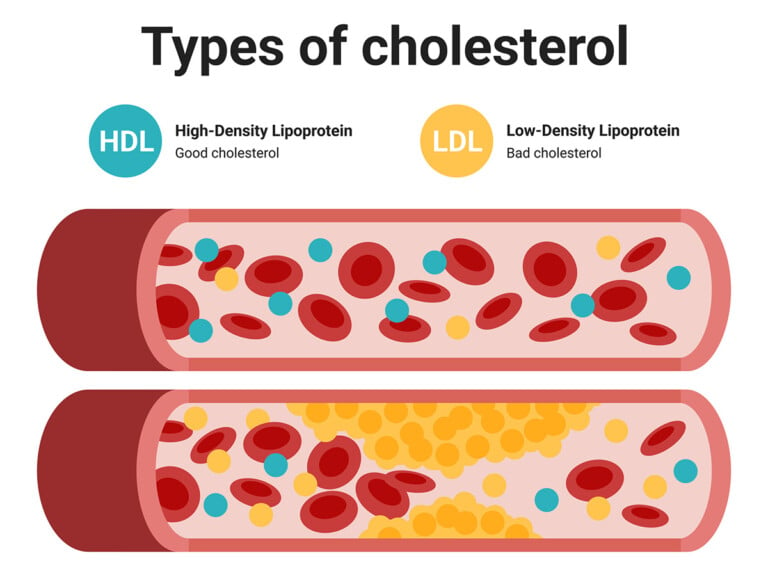



Managing your cholesterol is an important step toward protecting your heart health and reducing risk of cardiovascular disease (CVD). Cholesterol levels are influenced by combination of factors, including diet, physical activity, genetics, and weight. The good news is that small, consistent changes can make a meaningful difference. Here are a few modifiable factors to focus on when trying to lower cholesterol levels:
Limit Saturated Fat Intake
Saturated fat is a type of fat that increases the amount of cholesterol in the blood, specifically, LDL cholesterol. LDL is the “bad” type of cholesterol that can increase your risk for CVD. Keeping your intakes to less than 6% of total caloric intake can ensure healthy levels, or about 13 g daily for a standard 2000 calorie diet. Replacing saturated fat with unsaturated fats can assist with this, which is the type of fat that can help lower your overall cholesterol levels. Use this list of foods to help reduce your overall intake:
| Foods to Limit | Foods to Include (replace foods to limit with these) |
|---|---|
| Higher fat red meat & beef | Lower fat red meat & beef |
| Poultry with skin | Boneless, skinless chicken breast |
| Sausage (Italian, bratwurst, etc.) | Turkey sausage |
| Bacon | Turkey bacon |
| Beef tallow | Fish |
| Palm oil | Shrimp |
| Coconut oil | Olive oil |
| Butter | Avocado oil |
| Heavy cream | Canola or vegetable oil |
| Whole milk | Oil-based salad dressings |
| Cheese | Avocados |
| Cream cheese | Olives |
| Full-fat yogurt | Nuts |
| Salami | Seeds |
| Pepperoni | Nut butters |
| Bologna | Lower fat milk (2% or lower) |
| Hot dogs | Reduced fat cream cheese |
| Pizza | Light sour cream |
| Fried foods | Reduced fat cheese |
| Fast food | Non-fat/low-fat yogurts |
| Desserts | Turkey |
| Snack cakes | Ham |
| Candies | Baked potato chips |
| Baked goods | Pretzels |
| Potato chips | Popcorn (w/o extra butter added) |
Increase Fiber Intake
Fiber is a type of carbohydrate that is present in fruits, vegetables, whole grains, nuts/seeds, and legumes. When fiber is consumed, it helps to prevent absorption and increase excretion of cholesterol in the body. Fiber also helps to achieve a healthy weight. In general, women should aim for at least 25 g daily and 38 g daily for men. Additionally, consuming fiber from a variety of sources is equally as important as the amount you have. Use this list to diversify your fiber intakes:
| Fruits | Vegetables | Whole grains | Nuts/seeds | Legumes |
|---|---|---|---|---|
| Apples | Broccoli | 100% whole wheat bread | Almonds | Black beans |
| Pears | Cauliflower | Whole wheat tortillas | Pistachios | Pinto beans |
| Blueberries | Cucumbers | Brown rice | Peanuts | Kidney beans |
| Strawberries | Bell peppers | Whole wheat pasta | Walnuts | Cannellini beans |
| Blackberries | Spinach | Oatmeal | Cashews | Navy beans |
| Raspberries | Snap peas | Quinoa | Pumpkin seeds | Chickpeas |
| Grapes | Peas | Chia seeds | Lentils | |
| Oranges | Sweet potato | Flax seeds | Lima beans | |
| Peaches | Green beans | Sunflower seeds | Edamame |
Read this related wellness tip about fiber intake: “Love Your Heart? Eat More Fiber!“
Achieve a healthy weight
Research shows us that losing just 5-10% of your body weight can help reduce overall cholesterol levels. Excess fat tissue can signal our bodies to produce more LDL cholesterol and can make it more difficult for your body to clear it from the blood.
It is important to note that individuals at any size or weight can have high cholesterol. Work with your doctor or dietitian to see if weight loss would help with achieving lower cholesterol levels.
Increase Physical Activity
Exercise helps to increase how your body uses excess fats for energy vs. storing it, which helps to decrease the amount found in our blood. It also helps to increase our HDL cholesterol, which is a type of cholesterol that works like a “clean-up” system to carry extra cholesterol out of our blood. Exercise also assists with achieving a healthy weight.
Find exercise activities and a routine that you enjoy and that you feel is sustainable for you and your lifestyle. Per the American Heart Association, just 2.5 hours (150 minutes) of moderate intensity exercise per week can assist with lowering cholesterol levels.