

Experts in Hand and Upper Extremity
Elective conditions of the hand and upper extremity include tendon and nerve surgery, joint replacement, treatment of arthritis, and much more! Certain conditions, like carpal tunnel, a very common condition, are diagnosed and treated much differently today than they were just a few years ago. Other common hand conditions include trigger finger and thumb arthritis.
When surgery is not a needed option, patients may benefit from injection, splints, and other therapies to restore function to their hands and related extremities.
The Hand and Wrist Specialty
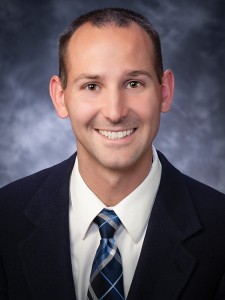
Dr. David Carl, DO
Hand and Wrist Conditions and Treatment
Endoscopic Carpal Tunnel Release
What is carpal tunnel?
Carpal tunnel syndrome is compression of the median nerve in the carpal tunnel causing symptoms of numbness, tingling, and pain in the thumb, index finger, middle finger, and half of the ring finger. Patients often report symptoms keep them up at night, are worse with driving, and often needing to shake their hand out or run the hand under warm water to try and get the sensation to return to normal. If this is left untreated, symptoms can gradually worsen causing constant numbness and weakness in the hand making it difficult to button buttons, pick up small objects (such as pills), and often drop items.
How is carpal tunnel treated?
Treatment typically begins with splinting at nighttime and/or a cortisone injection. Depending on severity of symptoms, surgical treatment may be recommended.
Surgical treatment for carpal tunnel syndrome involves cutting the transverse carpal ligament to take pressure off of the median nerve in the carpal tunnel. This can be done either with an open procedure or endoscopically through a smaller incision which often allows for a quicker recovery.
Endoscopic carpal tunnel release (Arthrex ECTR) is most commonly performed under local anesthetic is most commonly performed under local anesthetic (light sedation is also an option if patient prefers). The procedure is performed at Liberty St. Hospital or Grove St. Hospital. Although the surgery itself lasts only about 5 minutes, total time at the hospital is usually 3 hours.
Following endoscopic carpal tunnel release, there will be a dressing over the wrist that will be left in place for 48 hours. The goal for the first 48 hours is to minimize swelling through ice and elevation. After the dressing is removed, the incision takes 2 weeks to heal and only light activities are allowed during this timeframe. After 2 weeks, patient may gradually increase their activities as tolerated letting pain be their guide with grip strength expected to return to normal by 6-8 weeks.
Trigger Finger Release
What is trigger finger?
Trigger finger occurs when the flexor tendon of a finger (or thumb) does not glide smoothly through its sheath. Symptoms typically begin with pain at the base of the digit and progresses to catching or locking of the finger in a flexed position. Patient often report waking up in the morning unable to extend the affected digit from a flexed position with help.
How is trigger finger treated?
Treatment typically begins with splinting the digit in extension at nighttime and/or a cortisone injection.
Surgical treatment is A1 pulley release. The surgery is performed in a procedure room in the office under local anesthetic. The procedure usually takes about 5 minutes, total time at the office is about 1 hour. There will be an outer dressing over the hand which that will be left in place for 48 hours. The goal for the first 48 hours is to minimize swelling through ice and elevation. After the dressing is removed, the incision takes 2 weeks to heal and only light activities are allowed during this timeframe. After 2 weeks, patients may gradually increase their activities as tolerated letting pain be their guide. There is often residual stiffness in the middle knuckle of the surgical digit which slowly improves over 6-8 weeks. This typically resolves with home exercises but may require formal therapy.
Thumb CMC Arthroplasty (Basal Joint Surgery)
Thumb CMC arthritis causes pain at the base of the thumb adjacent to the wrist that is worse with gripping and twisting, such as when trying to open a jar. This is one of the most common locations for arthritis in the hand and treatment is based on the severity of pain and degree to which symptoms are interfering with activities of daily living.
Treatment typically begins with activity modification, anti-inflammatories, therapy, and bracing. A cortisone injection often provides temporary relief and can be repeated in 3-month intervals as needed.
Surgical treatment for thumb CMC arthritis is removing the arthritic bone (trapezium) and stabilizing the joint with a bone anchor and suture (Arthrex fiber lock). The procedure is performed at Liberty St. Hospital or Grove St. Hospital. The surgery itself lasts about 30 minutes and total time at the hospital is usually 5 hours.
Following CMC arthroplasty, a plaster splint will be placed in the OR and remain in place until the first postoperative visit in 2 weeks. During the first 2 weeks, the goal is to keep pain under control with a multimodal pain regimen along with ice and elevation. At 2 weeks the incision is checked and a removable brace is provided to wear most of the time except for gentle range of motion and hygiene. 6 weeks following surgery, therapy for strengthening begins and patient may wean out of the brace and gradually increase activities as tolerated. Total recovery time for this procedure is 3 to 6 months.
DIP Fusion
What is DIP fusion or arthritis?
DIP arthritis is the most common location for arthritis in the hand occurring at the knuckle just below the fingernail. Arthritis at this location often causes joint prominence and deformity. Treatment is aimed at relieving pain related to the arthritis, unfortunately there is not a good option to regain normal motion.
How is DIP arthritis treated?
Treatment typically begins with anti-inflammatories, bracing, and activity modification. A cortisone injection can also be helpful for temporary relief.
Surgical treatment for DIP arthritis is removing the arthritic surfaces of the DIP joint and fusing the joint together with a screw. While this procedure alleviates pain from arthritis, the tradeoff is complete loss of motion at the DIP joint. The surgery does correct angular deformity of the joint as well.
Following DIP fusion surgery, a plaster splint will be placed in the OR and remain in place until the first postoperative visit in 2 weeks. During the first 2 weeks, the goal is to keep pain under control with a multimodal pain regimen along with ice and elevation. At 2 weeks the incision is checked and a removable brace is provided to wear most of the time except for hygiene. 6 weeks following surgery, as long as there is healing on x-ray, patient may wean out of the splint and gradually increase activities as tolerated. Total recovery time for this procedure is 3 months.
Wrist Arthroscopy
Wrist arthroscopy is indicated for a variety of wrist conditions. Wrist arthroscopy involves placing a camera within the joint to directly inspect the joint surfaces. TFCC tears, partial scapholunate tears, and ganglion cysts are the most common problems that can be treated using wrist arthroscopy. Recovery from wrist arthroscopy varies depending on the procedure performed.
Ganglion Cyst Excision
What is a ganglion cyst and how is it treated?
A ganglion cyst is a benign collection of gelatinous material. These often occur adjacent to a joint. Weakening of the joint capsule allows joint fluid to leak out and form a ganglion cyst. Ganglion cysts commonly occur on fingers and can also present on the front or back of the wrist.
These are benign lesions, so treatment typically begins with observation and splinting. Removing the fluid using a needle in the office is also an option.
Surgical treatment is ganglion cyst excision. This surgery is performed at the hospital under local anesthetic or with light sedation depending on the location of the ganglion cyst. Total recovery time for this procedure is usually 4 to 6 weeks.
Fracture Care Surgery
Fractures (broken bones) are typically the result of a fall. Treatment for fractures depends on whether or not the bone is in acceptable alignment.
If the bone is in acceptable alignment, the fracture is immobilized in a splint or braced and allowed to heal on its own with repeat x-rays at regular intervals to confirm it maintains acceptable alignment. Bones typically take 4 to 6 weeks to heal.
If the bone is not in acceptable alignment, it may require surgical fixation. The goal for fracture surgery is to realign the bone and hold it in position with hardware such as pins, plates, and/or screws. The hardware holds the bone in alignment while it heals and allows for earlier motion as a cast is typically not necessary.
Dupuytren's Contracture
What is Dupuytren’s contracture?
Dupuytren’s is a genetic disorder which causes fascia to thickened presenting as nodules, cords, and finger contractures. Patients often notice that the contracture makes it difficult to put the hand in a pocket and difficult to put on gloves. Although there is no cure for Dupuytren’s, there are many treatments aimed at improving function by straightening the fingers.
What treatment options are there for Dupuytren’s?
These treatments include percutaneous needle aponeurotomy, collagenase enzyme injection, and surgical excision.Percutaneous needle aponeurotomy (PNA) is performed in the office under local anesthetic. A needle is used to weaken the cord allowing the finger to straighten.
Collagenase enzyme injection (Xiaflex) is performed in the office and requires 2 visits after the medication is approved by insurance and available. At the first visit, Xiaflex is injected into the cord. During the next 48-72 hours, the enzyme will weaken the Dupuytren’s fascia. At the second visit, the area will be numbed and finger manually straightened.
Surgery for Dupuytren’s contracture is performed at the hospital. Under sedation, the Dupuytren’s fascia is excised. Recovery from this procedure is typically 6 to 8 weeks.
Hand and Wrist Team
Orthopedic Surgeon
Dr. David Carl, DO
Education and Training
Medical School
Lake Erie College of Osteopathic Medicine, Erie, PA
Residency
Millcreek Community Hospital, Erie, PA
Fellowship
University of Buffalo, Buffalo, NY
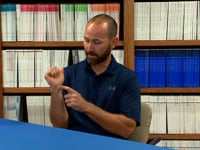
Dr. David Carl, DO: Connecting with Patients
David Carl, DO
David J. Carl, DO is a fellowship-trained orthopedic surgeon who specializes in surgery of the hand, elbow, and upper extremity. Dr. Carl attended Grove City College, where he received his Bachelor of Science in Molecular Biology. He went on to earn his Doctor of Osteopathic Medicine degree from the Lake Erie College of Osteopathic Medicine (LECOM) and later completed a Master of Science in Medical Education in 2016.
Guided by his Christian faith, Dr. Carl views his medical practice as a calling to serve his community. He was drawn to orthopedics by the opportunity to restore function and improve the quality of life for his patients, seeing the intricate restoration of the hand and upper extremity as a vital way to help individuals return to their daily lives and vocations.
Dr. Carl completed his residency training in orthopedic surgery through the LECOM health system at Millcreek Community Hospital. During this time, he gained extensive experience in musculoskeletal trauma and reconstructive surgery. To further specialize, he completed advanced fellowship training in Hand and Upper Extremity Surgery at the University at Buffalo in Buffalo, New York.
Dr. Carl’s clinical practice focuses on the complex anatomy of the hand and upper extremity. He specializes in advanced techniques, including minimally invasive carpal tunnel release, nerve repairs, tendon injuries, and reconstructive procedures of the wrist and elbow. He joined Orthopedic Associates of Meadville in 2020 and is a member of the American Osteopathic Academy of Orthopedics (AOAO) and the American Society for Surgery of the Hand (ASSH).
Dr. Carl resides south of Meadville with his wife and their four children. Outside of his medical practice, he is an avid outdoorsman who enjoys hunting and skiing. A craftsman at heart, he also spends his time woodworking and stays active through the practice of Jiu-Jitsu.

Physician Assistants
Garrick Drabina, PA-C
Garrick Drabina obtained both a Bachelor of Science, Health Science and a Masters of Physician Assistant Science (MPAS) from Gannon University. He joined Orthopedic Associates of Meadville in 2023.
Shelly Schmucker, PA-C
Shelly Schmucker received her Bachelor of Health Science and Master of Physician Assistant Studies from Gannon University. She joined Orthopedic Associates of Meadville in 2017.